How do T-money and Climate Card compare for monthly costs?
A standard T-money card charges per ride with transfer discounts, whereas the Climate Card functions as a flat-rate pass covering unlimited eligible trips for a fixed duration.
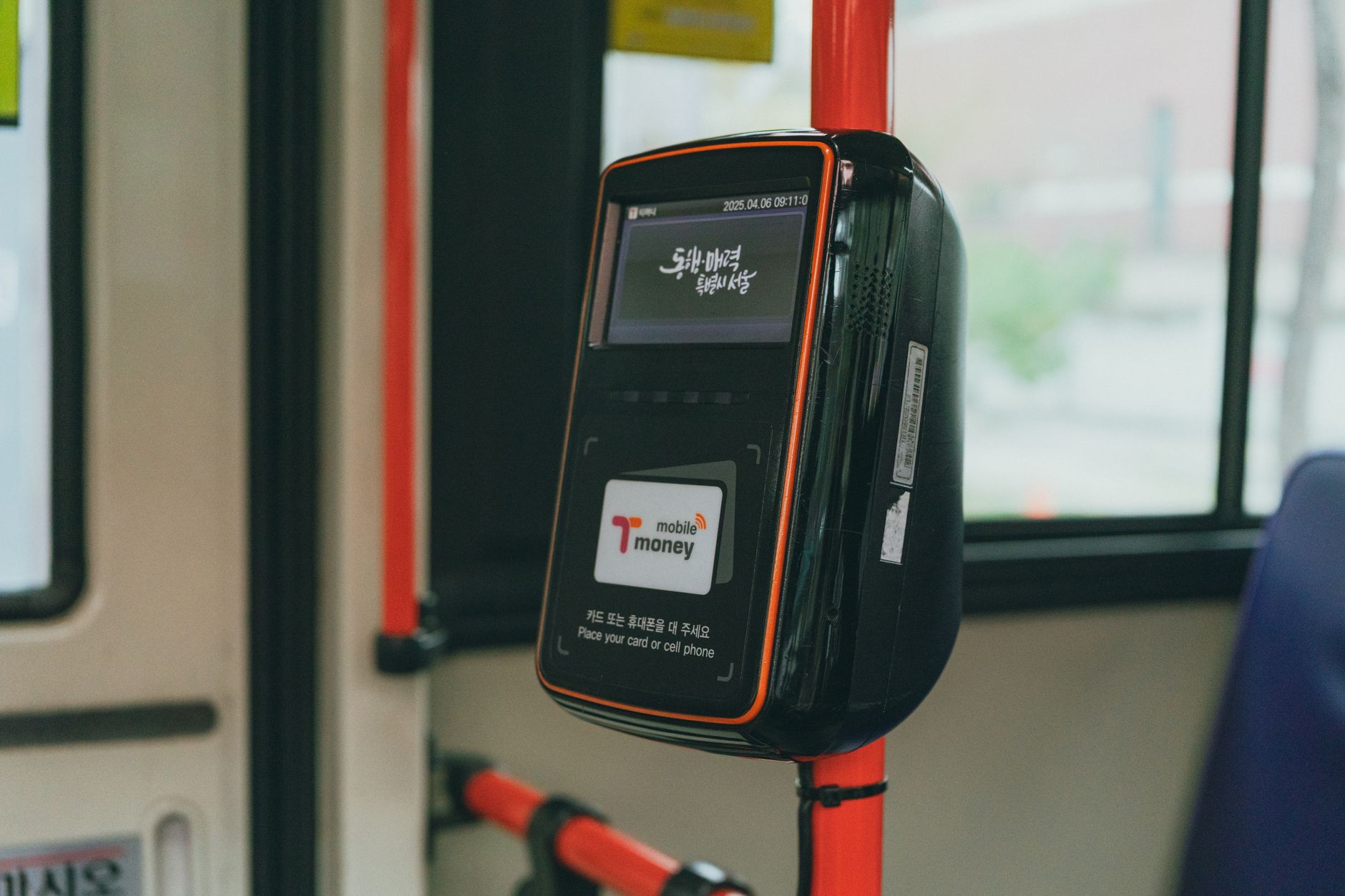
When settling into Seoul for a month or longer, daily travel expenses quietly accumulate. A regular T-money card requires an upfront fee of KRW 3,000 to KRW 5,000 for the blank card at convenience stores nationwide. If you transfer between subway lines or between buses and trains within the set transfer window, the system discounts or eliminates the secondary boarding charge, leaving you paying only for distance increments.
By contrast, the Climate Card, introduced by the Seoul Metropolitan Government, is designed specifically for residents and extended visitors moving frequently within municipal borders. According to official reports on Korea.net, the physical pass costs KRW 3,000 in cash at Seoul Metro customer centers and participating convenience stores. You then top up the card at ticket machines for a 30-day term. The basic transit package costs KRW 62,000 for unlimited subway and city bus rides, while an expanded tier at KRW 65,000 adds access to the city bike rental system, Ttareungyi (따릉이). Visitors staying for shorter periods can also choose short-term tourist options, including a 1-day pass for KRW 5,000, 2-day for KRW 8,000, 3-day for KRW 10,000, 5-day for KRW 15,000, or a 7-day pass for KRW 20,000 as detailed on VisitKorea.
| Feature | Standard T-money Card | Climate Card (Monthly) |
|---|---|---|
| Upfront Card Purchase | KRW 3,000 to KRW 5,000 | KRW 3,000 |
| Ongoing Monthly Cost | Pay-as-you-go (KRW 1,400 base fare) | KRW 62,000 (KRW 65,000 with bikes) |
| Geographic Usability | Nationwide across South Korea | Strictly within Seoul transit boundaries |
| Express & Regional Train Support | Supported on all rail lines and taxis | Excludes Sinbundang Line, GTX, and red buses |
How many rides make an unlimited transit pass worth the price?
The same math applies to visitors planning week-by-week itineraries using the short-term passes. A 7-day Climate Card is priced at KRW 20,000. For travelers heading out from neighborhoods like Myeongdong (명동) to visit museums in the morning, hopping to an afternoon cafe in Seongsu, and returning late after dinner, three rides per day are normal. However, if your stay involves working quietly from your apartment several days a week without leaving your neighborhood, your ride count may be low. In that scenario, paying each trip with T-money prevents you from paying for unused transit days.

Which transit lines and transport modes does each card cover?
T-money works on all transit modes throughout South Korea, while the Climate Card covers only Seoul-licensed city buses and Seoul metro sections, excluding express regional lines.
Understanding boundary limits is essential to avoid surprise exit fees. As outlined on Korea.net, the Climate Card covers Seoul subway lines 1 through 9, the Sillim Line, the Ui-Sinseol LRT, the Suin-Bundang Line, the Gyeongui-Jungang Line, the Gyeongchun Line, the Gimpo Gold Line, and the all-stop Airport Railroad Express (AREX) between Seoul Station (서울역) and Gimpo International Airport. It also covers Seoul-licensed city and village shuttle buses, including late-night routes. However, it explicitly excludes the privately operated Sinbundang Line, higher-speed Great Train eXpress (GTX) routes, and red intercity commuter buses that connect Gyeonggi Province to central Seoul. If you board an eligible train inside Seoul but disembark at an excluded stop in another province, your card will not work at the exit turnstile, and station staff will assess an additional fare.
A pay-as-you-go T-money card carries none of these geographical boundaries. It is valid on city buses in Busan, intercity buses across Gangwon Province, regional train connections, highway toll gates, and metered street taxis nationwide. For extended visitors who plan weekend day trips outside Seoul, keeping a balance on a standard T-money card remains necessary even if you keep a Climate Card for daily city routines.
Foreign travelers should also note purchasing mechanics before relying on digital passes. According to guidance documented on Korea.net, digital Climate Cards are limited to Android devices using the Mobile T-Money application and require a domestic Korean bank account. International visitors must instead purchase the physical plastic card for KRW 3,000 in cash at station customer service booths or nearby convenience stores, and reload it with Korean Won cash at subway kiosks. You must designate your starting activation date within five days of loading the card.
Frequently asked questions
Can tourists buy and reload the monthly Climate Card with an international credit card?
No, international cards cannot be used directly at standard subway vending machines. Travelers must purchase the physical plastic card for KRW 3,000 in cash and load the monthly or short-term pass using Korean Won cash at station kiosks or convenience stores.
Does the Climate Card cover the train all the way to Incheon International Airport?
Regular Climate Card transit coverage on the Airport Railroad Express ends at Gimpo International Airport. While special disembarkation rules permit exiting at Incheon Airport terminals without penalty, the pass is not designed for unrestricted two-way airport express commuting outside Seoul borders.
What should you do with leftover cash loaded on a T-money card when leaving Korea?
For larger balances over KRW 50,000, you must visit the official T-money Town office located near Seoul Station Exit 10 to receive your cash refund.
Can one transit card be tapped twice to pay for two people traveling together?
Pay-as-you-go T-money cards allow multi-passenger payments on certain city buses if you inform the driver before tapping, though this disrupts transfer discounts. Climate Cards and unlimited passes are strictly non-transferable and can only be used by one passenger per journey.
Updated 10 November 2026
Sources
- VisitKorea: **T-money**: Standard prepaid pay-as-you-go card (KRW 3,000–5,000 blank card purchase) usable nationwide on all subways, city/intercity buses, express buses, and taxis with automatic transfer discounts **Climate Card**: Seoul Metropolitan Government unlimited pass covering Seoul subway lines (1–9, Sillim Line, Ui-Sinseol LRT, Gyeongui-Jungang, Suin-Bundang, Gimpo Gold Line, AREX all-stop within Seoul) and Seoul-licensed city/shuttle buses It excludes the Sinbundang Line, GTX, and red intercity buses **Short-Term Tourist Tourist Passes**: 1-day (KRW 5,000), 2-day (KRW 8,000), 3-day (KRW 10,000), 5-day (KRW 15,000), and 7-day (KRW 20,000) **Physical Card Purchase**: KRW 3,000 cash at Seoul Metro customer centers and participating convenience stores Physical cards require cash (Korean Won) at station ticket machines or metro customer centers to buy and reload
- Korea.net: **Climate Card**: Seoul Metropolitan Government unlimited pass covering Seoul subway lines (1–9, Sillim Line, Ui-Sinseol LRT, Gyeongui-Jungang, Suin-Bundang, Gimpo Gold Line, AREX all-stop within Seoul) and Seoul-licensed city/shuttle buses It excludes the Sinbundang Line, GTX, and red intercity buses **Monthly Pass**: KRW 62,000 (subway + bus) or KRW 65,000 (subway + bus + Ttareungyi public bike sharing) for 30 consecutive days **Physical Card Purchase**: KRW 3,000 cash at Seoul Metro customer centers and participating convenience stores Physical cards require cash (Korean Won) at station ticket machines or metro customer centers to buy and reload Mobile passes are restricted to Android via Mobile T-Money linked to Korean bank accounts Foreigners must designate start dates within 5 days of loading
- Korea.net: It excludes the Sinbundang Line, GTX, and red intercity buses
- Korea.net: **Monthly Pass**: KRW 62,000 (subway + bus) or KRW 65,000 (subway + bus + Ttareungyi public bike sharing) for 30 consecutive days Mobile passes are restricted to Android via Mobile T-Money linked to Korean bank accounts Foreigners must designate start dates within 5 days of loading